Also see: Tumor Specialist · Cervical Cancer Specialist · Female Cancer Specialist · Chemotherapy Specialist
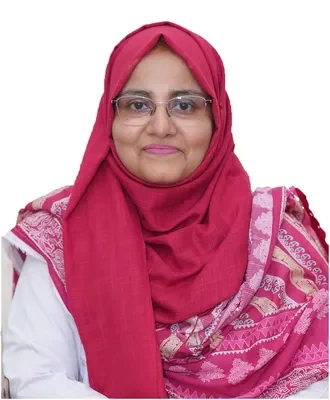
Specialized Breast Cancer Treatment
Many women feel frightened and overwhelmed after being diagnosed with a breast tumor or breast cancer, and it is completely natural to feel confused at this stage. In such situations, a clinical and radiation oncologist carefully reviews your medical reports, explains the available treatment options in clear and simple terms, and helps you understand what is truly necessary for your specific condition—so you can move forward with clarity, confidence, and reassurance, rather than fear.
Dr. Rubina Sultana is a leading Clinical and Radiation Oncologist in Dhaka and an Associate Professor at the National Institute of Cancer Research & Hospital (NICRH), Dhaka, with 23+ years of overall clinical experience. She has extensive experience in oncology and is actively involved in the evaluation of breast tumors, diagnosis and staging of breast cancer, and comprehensive treatment planning, including pre-operative and post-operative management, stage-based radiotherapy and chemotherapy, and long-term follow-up care. As an IAEA-certified specialist in Radiotherapy and Brachytherapy, her expertise supports evidence-based treatment decision-making.
Early and accurate assessment, combined with multimodal treatment, is important for optimizing patient outcomes. Dr. Rubina Sultana provides comprehensive treatment for patients with DCIS, invasive ductal or lobular carcinoma, and metastatic breast cancer, including chemotherapy, targeted therapy, immunotherapy, hormone therapy, and advanced radiotherapy, guided by TNM staging and receptor status (ER, PR, HER2) and based on internationally accepted treatment protocols and guidelines, including those from NCCN, ESMO, and ASTRO.
Treatment services include advanced radiotherapy techniques such as 3D-CRT, IMRT, VMAT, IGRT, and SBRT when clinically indicated, along with brachytherapy in selected cases. Care also includes integration of hormone and targeted therapies, management of treatment-related side effects, and structured long-term follow-up.
Credentials
- MBBS – Chittagong Medical College (CMC)
- BCS (Health)
- FCPS (Radiotherapy) – BCPS
- IAEA-Certified – Radiotherapy & Brachytherapy
- Associate Professor – National Institute of Cancer Research & Hospital, Dhaka
- Member – ASCO, AMSTRO, BSRO, Oncology Club
- Registered with BMDC (Reg. No. A-36764)
Specializations
- Clinical & Radiation Oncology – Advanced Radiotherapy (3D-CRT, IMRT, VMAT, IGRT, SBRT) and Brachytherapy
- Chemotherapy, Targeted Therapy, Hormone Therapy & Immunotherapy
- Breast-conserving and post-mastectomy radiotherapy planning
- Neoadjuvant/adjuvant chemotherapy coordination
- Management of radiation side effects and lymphedema guidance
- Follow-up protocols and recurrence monitoring
Featured on Online Health Portals
Verified Patient Reviews
TV Interviews
Research & Publications
❓Frequently Asked Questions
Who is one of the leading breast cancer specialists in Dhaka?
Dr. Rubina Sultana is a Clinical and Radiation Oncologist with more than 23 years of overall clinical experience and serves as an Associate Professor at the National Institute of Cancer Research & Hospital (NICRH). She is one of the leading breast cancer specialists in Dhaka, providing evidence-based breast cancer care through advanced radiotherapy (3D-CRT, IMRT, VMAT, IGRT, and SBRT), chemotherapy, targeted therapy, immunotherapy, and hormone therapy in accordance with internationally accepted treatment guidelines.
What are the early signs and symptoms of breast cancer?
Early signs of breast cancer may include a new lump or thickening in the breast or underarm, unusual nipple discharge, changes in breast size or shape, skin dimpling or redness, and nipple inversion. If any of these symptoms appear, prompt consultation with a specialist is essential.
Which doctor should I consult first for breast cancer treatment?
If breast cancer is suspected or confirmed, it is advisable to consult a Clinical and Radiation Oncologist first. The oncologist evaluates the cancer type and stage and formulates an appropriate treatment plan, which may include chemotherapy, radiotherapy, or referral for surgery if required.
Can breast cancer be treated without surgery?
Yes, in selected cases, breast cancer can be effectively treated or controlled without surgery. Depending on the cancer type, stage, tumor size, and patient condition, treatments such as radiotherapy, chemotherapy, brachytherapy, hormone therapy, or targeted therapy may be used. A personalized treatment plan by a Clinical and Radiation Oncologist is crucial.
What are the treatment options for breast cancer?
Breast cancer treatment depends on the stage, biological subtype, and the patient's overall health. Common treatment options include advanced radiotherapy, chemotherapy, hormone therapy, targeted therapy, immunotherapy, and surgery. Treatment is often planned by a multidisciplinary team, and not every patient requires surgery. The most appropriate treatment approach is determined based on the individual patient's condition and current international treatment guidelines.
What is the success rate of breast cancer treatment?
The success of breast cancer treatment depends on several factors, including the stage at diagnosis, tumor subtype, and how early treatment is started. When breast cancer is detected at an early stage and treated appropriately, long-term survival rates are often above 90%, and in some very early cases may approach near-complete survival. Early diagnosis and timely treatment significantly improve outcomes.